Orchestrata Ultimate › Plans › build-factory-architecture
Build Factory — self-improving, pattern-based, TDD spec-build pipeline (2026-07-06)
Source: plans/build-factory-architecture.md at 8a2cb42ad · last changed 2026-07-27 · first committed 2026-07-06 · 168 lines.
Prose pending.
Plan text
Build Factory — self-improving, pattern-based, TDD spec-build pipeline (2026-07-06)
Dogfood Orchestrata to build Orchestrata. A self-improving factory that turns a spec into merged, traced, tested code using the project's own roles, tools, generators, and knowledge graph — augmenting each where it falls short.
Companion to swarm-plan-prioritized-2026-07-06.md (WHAT to build, by impact)
and wiring-campaign-2026-07-06.md (unwired code). This doc is HOW the swarm
builds — the repeatable machine.
Roles (external swarm now → internal volks as they're wired)
| Factory role | External (today) | Internal target (dogfood) | Duty |
|---|---|---|---|
| PM / manager | Opus + session/goal CLI | PMVolk (SPEC-012) | decompose specs → briefs; track goal + backlog in KG |
| Orchestrator | Opus (this loop) + Workflow | kernel/pipeline orchestrator | sequence phases, fan-out, merge serially |
| Analyst / designer | analyst agent (Fable) |
Analyst volk (SPEC-019) | spec → contract diagram + trace-map + TDD plan |
| Builder | builder (Sonnet) |
Junior/CodeDirector volks | implement skeleton bodies to green |
| Tester | test-writer (Sonnet) |
QA volk (SPEC-031) | TDD tests, coverage, no-mock verification |
| Reviewer | reviewer (Opus) |
CodeDirector self-review | adversarial correctness + trace/pattern audit |
Bootstrapping: the external swarm builds the factory AND wires the internal volks. As PM/orchestrator/analyst/QA/context-manager/KG come online (swarm-plan P1/P2), build tasks progressively hand off to the real volks. The factory is both the tool and the first customer.
Pipeline (TDD-first)
- Analyze — analyst reads
requirements.md+ framework; extracts every FR. - Design — Mermaid class-diagram CONTRACT with GoF patterns +
@traces. 2b. Design review (DeepSeek) — before building, get an independent cross-vendor critique of the contract + scope calls:uv run python scripts/ask_openrouter.py --model deepseek/deepseek-v4-pro(NOT r1) with the recon + proposed plan. Fold in its build-order / scope-cut / risk findings. Cheap second opinion; catches shape errors (e.g. "LSP is stateful — wrong fit for one-shotexecute") before code. - Test-plan (RED) — one test per FR, tests authored/scaffolded BEFORE code.
- Skeleton —
gen-skeleton(NEW) emits typed, traced stubs (NotImplementedError). 4b. PUSH master BEFORE spawning worktrees —Agent(isolation=worktree)branches offorigin/master, NOT local HEAD. Any unpushed commit's EDITS to existing files are invisible to the builder (it silently works the pre-edit version). So: land + push the dependency commits first, THEN delegate edits; delegate NEW-file creation any time. Also: don't run a full gate while a worktree builder is doinguv run— the shared editable-install.pthflips between worktrees and contaminates the run (phantom ImportError/failures). Seememory/worktree-base-is-origin-master.md. - Implement (GREEN) — builder fills bodies until the RED tests pass.
- QA —
run_tests.py(per-worker Neo4j/Redis, no-mock), tiered coverage. - Review + gates —
check-traces,standards, RTM regen, adversarial review. - Improve — critic: uncovered FRs? pattern misuse? trace gaps? tool friction? → feeds the next iteration AND the factory's own backlog (self-improvement).
Design patterns (baked into skeletons + the factory itself)
- Abstract Base —
Tool(ABC)with@abstractmethod execute; each tool subclasses. - Command —
execute(args) -> ToolResultis a Command; build steps are Commands. - Factory —
ToolRegistry/AgentFactoryconstruct by key/spec. - Singleton —
ToolRegistry, the process-global Prolog engine, KG driver. - Strategy — per-stereotype skeleton emitters; per-phase workflow behavior; pluggable tool backends (e.g. LSP transport).
- State — tool/session lifecycle;
WorkflowStatemachine over the 8 phases.
Pattern-first determinism (the core bet)
Investing in the RIGHT patterns means the GENERATOR writes ~half the code
deterministically — not the LLM — so we save time and avoid mistakes. For each
recognized pattern gen-skeleton emits the scaffolding FULLY IMPLEMENTED and
leaves only domain "leaves" marked # IMPLEMENT::
- Command (
execute): arg parse/validate (from the Args dataclass), try/except →ToolResultwrapping, a config-gated tracer span — generated. Leaf = core op. - Strategy: the Protocol + selection/injection wiring — generated. Leaf = each concrete strategy's core step.
- Factory + Singleton: registry registration + accessor — generated.
- Composition/DI
__init__: wiring of injected components — generated. Skeletons come out ~50% real code, not empty stubs. Generator is trusted for boilerplate; the LLM writes only what it must.
Composition over inheritance
Tool is a thin Protocol (interface); BaseTool COMPOSES behavior via injected
components (_executor, _validator, _tracer, _registry) — no deep hierarchy.
gen-skeleton emits composition wiring + constructor DI, never inheritance chains
past ONE ABC/Protocol boundary. Prefer HAS-A (delegate to a Strategy) over IS-A.
Configurable debugging & tracing (two distinct axes)
- Requirement tracing —
@traces(spec,story,reqs)(static, for RTM/KG). - Runtime tracing/debug — an injected
Tracerbound to aTraceConfig(Singleton, env/config-driven: log level, spans on/off, sink). Generated code emitsself._tracer.span(...)/loggergated by config — NEVER hard-coded prints. Closes SPEC-100's structured-tracing gap; toggleable per deploy/test.
Ground every design in the real codebase (AST, never guess)
Analyst/wirer MUST run symbols, refs, who-imports, call-graph, find-cycles,
dead-params BEFORE designing/wiring: find components to COMPOSE/reuse (composition!),
detect twins to consolidate (not duplicate), confirm the wiring seam, prove no
cycles/dead params. gen-skeleton re-parses its own output (ast.parse) + runs
check-traces to self-verify.
Tooling — existing (reuse) vs NEW (build)
Existing AST toolkit (scripts/serialize_codebase_ast.py): gen-volk,
gen-protocol, gen-tests, interface, gen-dto/enum/serde/facade, diagram,
add-trace, check-traces, refs, rename, standards, pattern.
NEW / augment:
gen-skeleton(linchpin) — Mermaid classDiagram → typed,@traces'd Python skeletons. Uses Strategy (ToolEmitter / DataclassEmitter / ProtocolEmitter / EnumEmitter) + a Factory to select by<<stereotype>>. Emits a companion trace-map JSON. Convention below.gen-tool— spec+reqs → Tool subclass + registry registration + test scaffold (the no-diagram fast path; mirrorsgen-volk).- FR-coverage checker —
requirements.mdFRs ↔ skeleton methods ↔ tests (TDD gate). - Mermaid-contract linter — validate a design diagram (reuse
_validate_mermaid). - trace-map → KG ingester — register skeleton artifacts + REQ→Artifact→Test edges.
Mermaid → skeleton convention (what gen-skeleton consumes; what analyst emits)
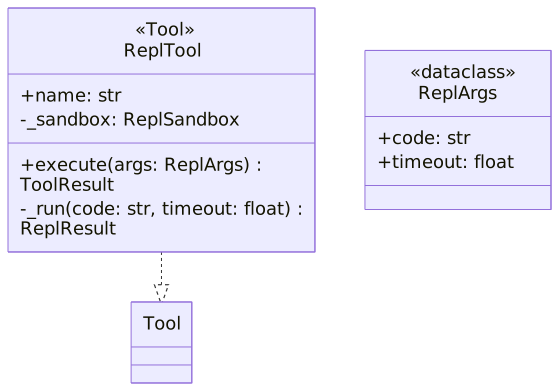
<<Tool>>|<<dataclass>>|<<Protocol>>|<<enum>>→ base class / decorator (Factory-selected emitter).%% traces spec= story= reqs=inside a class block →@traces(...)on the class (methods inherit unless a%% <method> traces reqs=line overrides).+/-→ public /_-private.+m(p: T) Ret→ typed method;+a: T→ typed attribute (ctor field or dataclass field).A ..|> B→A(B)(extends/implements). Emit absolute imports (infer known bases), Google docstring stub, bodyraise NotImplementedError("<Class>.<m>: <spec> not yet implemented").
Skills / hooks / utils to add
- Skill
.claude/skills/build-factory/— invoke the whole pipeline on a target. - Hook PostToolUse (src edits) →
check-traces+standards(block trace-lies at write time — kills the audit's #1 systemic defect). - Hook pre-merge → RTM regen (scoreboard never drifts).
- Util contract-linter + FR-coverage checker wired into the QA/gate phase.
Knowledge graph (augment minimally — schema mostly suffices)
Canonical labels already present: Project, Intent, PipelineRun, Decision, Artifact (+ merge keys via get_canonical_merge_keys). The factory:
- Design diagram, skeleton, impl module, test module → Artifact nodes.
- Rulings (D12, 012/023, A4, patterns chosen) → Decision nodes.
- Each build → PipelineRun; link
REQ →SATISFIED_BY→ Artifact →VERIFIED_BY→ Test. - Wire
ContextInjector(009) sopayload["task_context"]is CONSUMED (today produced-only) → every agent is auto-fed its REQ/context slice. - Wire
ContextFileManager(023) as the single goal/context store; migrate PM's rawcontext.json["goals"]I/O onto it (012-vs-023 ruling: 023 wins). Net new schema: anArtifact.kind ∈ {contract, skeleton, impl, test}convention + the REQ↔Artifact↔Test edges. No new labels required.
Self-improving loop
The workflow is versioned. Each run's Improve/critic phase emits concrete
proposals (gen-skeleton gaps, missing patterns, agent-brief fixes, KG edges).
Those become the factory's own backlog → applied → next version is faster/more
deterministic. v0.1 = agent-translates diagram→skeleton; v0.2 = gen-skeleton
deterministic; v0.3 = FR-coverage + KG ingestion gates; etc. The workflow works
at every version and strictly improves.
Immediate sequence (queued with briefs)
gen-skeleton(builder, TDD, worktree) — the linchpin. (dispatched)analystagent (Fable) + factory workflow v0.1 (Design+Critique). (this turn)- Wire context — ContextFileManager (023) + ContextInjector (009) consumer (wirer).
- KG — Artifact.kind + REQ↔Artifact↔Test edges + trace-map ingester (builder).
- Hooks/skill/utils — trace/standards PostToolUse hook, FR-coverage checker, build-factory skill.
- P0 safety fixes (swarm-plan) run in PARALLEL via direct builders — highest impact, don't wait on the factory.
- First real target through the full factory: tool-subset (SPEC-072 → 065 → 063 → 069 → 064).